
Best Odds Guaranteed in the UK: The Quiet Promotion That Actually Earns Its Keep
 Available in US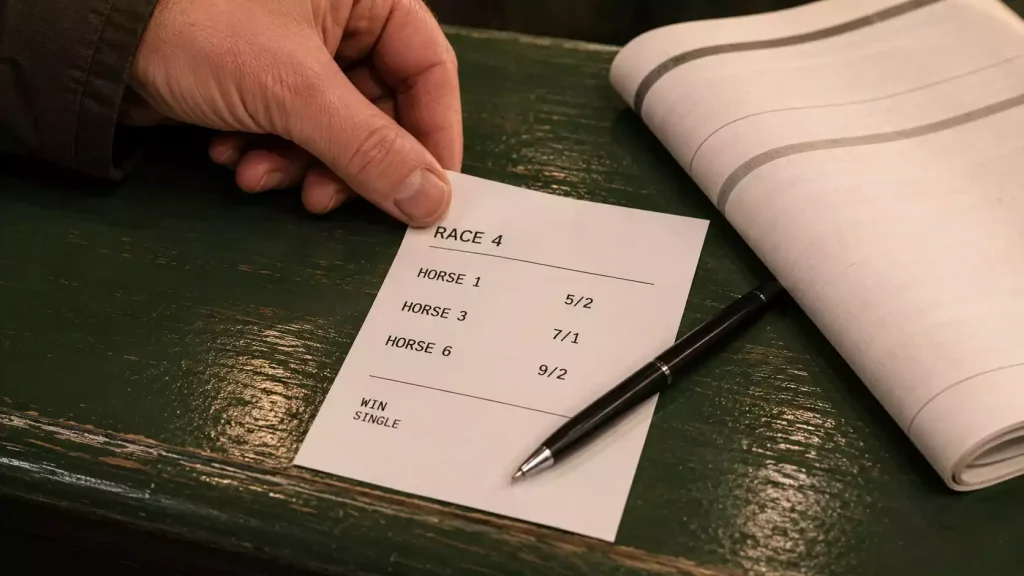
The Only Sportsbook Promotion Worth Reading Twice
The Wednesday afternoon I learnt the genuine economic value of Best Odds Guaranteed was a small handicap at Catterick in 2017. I had backed an 8/1 chance at 9.30am; the horse was clipped to 9/2 by the off; the bet settled at 8/1 plus stake because BOG was in force. The £35 of extra winnings on a £10 bet – versus the SP settlement – was the cleanest piece of operator-side promotional value I had ever received. The slip was identical to one I would have placed anyway; the promotional uplift was effectively a free £35.
That experience is the central case for BOG as a promotion. Unlike free-bet offers (which require qualifying activity and usually carry rollover conditions), unlike extra-place promotions (which require specific each-way slip structures), unlike price boosts (which are operator-selected and rarely available on the slip you want to place), BOG operates as a passive uplift on bets the customer would have placed regardless. It is the rare promotional structure where the customer captures genuine value without changing their behaviour.
The promotion has become standard across major UK operators on horse racing markets, with cosmetic variations in the cut-off times and the eligible markets. The variations matter – some operators run BOG from 8am, others from 10am; some include all UK and Irish meetings, others exclude certain low-grade fixtures – but the underlying mechanic is consistent. Understanding the precise structure on the operator you use most is one of the highest-return pieces of homework a regular racing customer can do.
Best Odds Guaranteed in the UK — More on this topic at bet to show horse racing .
How Best Odds Guaranteed Actually Settles
The BOG promotion guarantees that the customer’s bet will be settled at the better of two prices: the price taken at the time of slip placement (the “early price”) and the official starting price (SP) when the race is run. If the horse’s SP is shorter than the early price, the bet settles at the early price. If the SP is longer than the early price, the bet settles at the SP. The customer captures the upside on either side of the price movement.
The mechanic is implemented at the bookmaker’s settlement engine after the race is run. The customer places the bet at the early price and the bookmaker records that price as the slip’s struck price. When the race runs, the SP is determined by the official starting-price mechanism (typically the median of on-course bookmaker prices at the off), and the settlement engine compares the early price against the SP and applies whichever is higher to the winning bet.
A worked example. £10 win bet at 9/1 placed at 11am on a 16-runner Cheltenham handicap. The horse shortens to 13/2 by the off. SP is 13/2. The bet wins. Without BOG, the bet would settle at the early price of 9/1, returning £90 profit plus £10 stake = £100. With BOG, the bet settles at the higher of 9/1 (early price) or 13/2 (SP) – the early price wins, and the bet settles at £100. In this case BOG has no effect because the early price was already the higher of the two.
A second worked example. £10 win bet at 11/2 placed at 11am. The horse drifts to 8/1 by the off. SP is 8/1. The bet wins. Without BOG, the bet would settle at 11/2, returning £55 profit plus £10 stake = £65. With BOG, the bet settles at the higher of 11/2 (early price) or 8/1 (SP) – SP wins, and the bet settles at £90. The BOG uplift is £25 on a £10 bet, captured without the customer changing the slip in any way.
The settlement happens automatically and is not subject to customer action. The customer does not need to opt in to BOG, does not need to claim the uplift, and does not need to monitor the SP after placing the bet. The system handles the comparison and applies the better price as part of standard settlement. The transparency is structurally important – the customer can verify the settlement against published SPs after each race.
When BOG Switches On and Off
The BOG window opens at a specific time each morning at each operator. The most common opening time is 8am, with some operators running from 9am or 10am. The window then runs continuously through the day until each individual race goes off. Bets placed inside the BOG window are eligible for the SP uplift; bets placed outside the window (typically overnight bets struck the previous evening) are not.
The closing trigger is the race off. Bets struck before the off are eligible for BOG; bets placed in-play are settled at the in-play price taken and are not eligible for the SP uplift. The in-play exclusion is structurally important because in-play prices reflect a fundamentally different information set from pre-race prices, and the SP comparison is not meaningful for in-play slips.
The eligible-markets list is the variable that customers most often overlook. Most operators offer BOG on UK and Irish horse racing as a default, but the coverage of international meetings varies significantly. Operators that have invested in their international racing product (typically the operators with strong US racing markets) tend to extend BOG to selected American meetings; operators with limited international product typically do not. Customers betting on international racing should check the BOG terms-and-conditions specifically rather than assume the UK coverage extends.
The cut-off for slip placement before the off varies by operator. Most operators allow BOG-eligible slip placement up to the moment the race goes off, but some impose a one-minute or two-minute cut-off before the off to allow the settlement engine to capture the final pre-race price cleanly. The difference rarely matters for routine slip placement but can matter for customers placing slips in the final minutes before a race.
One operator-specific detail worth understanding: BOG eligibility may be contingent on the slip type. Win-only slips are universally BOG-eligible; each-way slips are usually eligible for BOG on the win portion only, with the place portion settled at the original each-way fraction without BOG uplift. Multi-leg slips (doubles, trebles, accumulators) are typically not BOG-eligible across the multiple, with the standard slip prices applying to settlement.
How BOG Affects Each-Way Slips Specifically
The each-way slip interaction with BOG is the area where most customers either miss value or misunderstand what they are actually getting. The standard rule across UK operators is that the BOG uplift applies to the win half of an each-way slip but not to the place half. The place half settles at the original each-way fraction of the original early price, regardless of how the SP compares.
A worked each-way example. £10 each-way bet at 8/1 with 1/5 place fraction on a 16-runner handicap. Total stake £20. The horse drifts to 16/1 by the off. SP is 16/1. The horse wins. Without BOG, the bet settles at 8/1 on the win half (£80 profit plus £10 stake = £90) and 8/5 on the place half (£16 profit plus £10 stake = £26), for total return £116 and profit £96 on the £20 outlay. With BOG, the win half settles at 16/1 (£160 profit plus £10 stake = £170) and the place half stays at 8/5 (£26). Total return £196, profit £176.
The BOG uplift on the win half is £80 in this example, on a £20 outlay. The place half remains at the original 1/5 of 8/1 fraction – at 8/5 – even though the SP at 1/5 of 16/1 would have been 16/5. The customer captures only the win-side uplift, not the place-side. This is the standard structure and is the area where customers sometimes feel cheated when reading their settlement closely.
The structural reason for the win-only BOG application is that the place portion of each-way slips is calculated against the place-terms fraction at the time of slip placement, and the operator does not want to expose itself to compounding price-and-terms uplift on the place half. The mechanism is a margin-management decision rather than a customer-friendly choice, but it has been the consistent standard across UK operators for over a decade.
The interaction with the UK place-terms scale matters. The standard scale – 1-4 runners win only, 5-7 runners pay 2 places at 1/4, 8 or more non-handicap runners pay 3 places at 1/5, 8-11 handicap runners pay 3 places at 1/5, 12-15 handicap runners pay 3 places at 1/4, 16 or more handicap runners pay 4 places at 1/4 – interacts with BOG only on the win side of the slip. The place side runs on the original early-price fraction regardless of SP movement.
See also Show Bet vs Place Bet .
BOG vs Extra Places vs Boosts: A Quick Hierarchy
BOG, extra-place promotions and price-boost offers form the three structural pillars of UK racing-betting promotional value. Each has its own structural logic, its own customer-fit profile, and its own appropriate use case. Understanding the hierarchy is the most efficient single piece of promotional literacy a regular racing customer can carry into the 2026 season.
BOG is the structurally strongest promotion because it operates passively across all slip placements in the eligible window and captures real value on any bet where the horse drifts in the market. The customer does not need to engage with the promotion, does not need to qualify by activity level, and does not need to change slip structure. The promotional value is captured silently as part of settlement.
Extra-place promotions are the most powerful event-specific promotion. The 2026 Grand National with most operators offering 6 places at 1/5 and Sky Bet stretching to 7 places at 1/5 is the cleanest example. The promotion captures value on each-way slips that would have been losses under standard terms, and the value is concentrated on specific races (typically the major handicaps and headline events) where the operator’s competitive logic is strongest. Customers planning to bet on those specific events should compare extra-place offerings carefully.
Price boosts – operator-selected single-bet enhancements with above-market prices – are the most variable promotion. The customer captures real value only on the specific selections the operator has boosted, and the boosted selections are typically chosen by the operator’s marketing team rather than the customer. The structural value is real but applies only to a small subset of possible slips. Most customers will use price boosts opportunistically rather than systematically.
The optimal customer behaviour combines all three. Use BOG passively by placing slips inside the eligible window at every operator. Compare extra-place offerings across operators on specific major-event slips, particularly each-way slips on big-field handicaps. Watch operator price boosts on selections the customer was likely to place anyway, but do not chase boosted selections that the customer would not otherwise have backed.
The wider context that holds all of this together is the fundamental question of what the customer is actually betting – and specifically, the structural difference between a show bet, a place bet, and the each-way slips that combine elements of both into the British each-way structure. The detailed comparison of show versus place bets, and how the American and British structures actually map onto each other, is the structural foundation under everything else covered across this set of articles. I’ve worked through that comparison in detail in the analysis of show bet versus place bet.
Frequently Asked Questions
Is BOG paid out on Tote dividends as well as fixed-odds prices?
No. BOG applies to fixed-odds settlement only, comparing the early fixed-odds price taken at slip placement against the official starting price. Tote dividends are calculated by pari-mutuel pool mathematics and are not part of the BOG comparison structure. Customers who place Tote-based bets do not receive any BOG-style uplift, and the dividend that settles is the one determined by the pool composition regardless of the early-price movement on the same horse in fixed-odds markets.
Are BOG-eligible markets always the same across operators?
No, and this is one of the most overlooked points in operator-specific promotional structures. UK and Irish horse racing is the universal BOG market across major operators, but international racing coverage varies significantly. Operators with strong US racing products typically extend BOG to selected American meetings; operators with limited international coverage typically do not. Greyhound racing has its own operator-specific BOG-equivalent promotions that are not always called BOG and may run on different terms. Customers betting on international racing should verify BOG coverage in the operator's specific terms-and-conditions.
Guides
Ante-Post Each-Way: Long-Range Pricing, Each-Way Mathematics, One Long Wait
Betting Months Ahead: Where Each-Way Patience Pays I placed my first ante-post each-way slip in January 2018 - Tiger Roll at 33/1 each-way for that year's Grand National. Three months…
Who Bets on Horses in Britain? Reading the 2025 GSGB Like a Punter
The Statistical Portrait of the Average British Racing Punter If you had…
Problem Gambling Among UK Racing Punters: What the Data Actually Shows
The 2.8% Number That Quietly Sits in the Background The first time…
How Many Places Does a Place Bet Pay? The UK Field-Size Rule, in Full
The Industry's Default Place Table, Without the Footnotes The number of places…
Placepot, Jackpot and Quadpot: The British Tote's Multi-Leg Family
The One Pool Game British Punters Still Reach For The Placepot has…
